Free production calculator

Production bottleneck calculator

Compare the effective rates of up to four packaging line stations and identify the current capacity constraint.

No sign-up is required. Values are calculated in the browser and are not submitted.

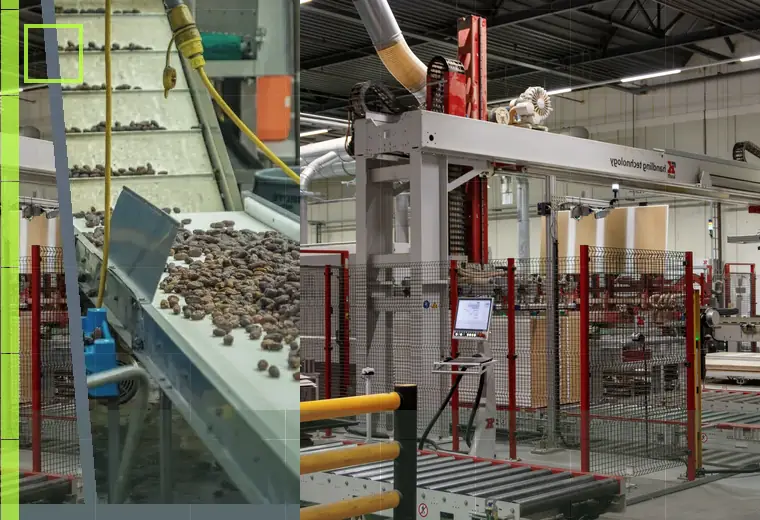
Production line relating to production bottleneck calculator

What this calculator does

This calculator converts each station’s nominal rate and expected uptime into an effective rate and identifies the lowest value as the likely capacity constraint. It is a first-pass model; real lines also need accumulation, stop interaction, product mix and quality data.

Station 1
Station 2
Station 3
Station 4
Enter your figures and select calculate.
Planning estimate: Effective station rate = nominal good-capable rate × expected uptime percentage. The lowest effective rate is the first capacity constraint in this simplified model.

Enter comparable station rates

Use the same unit—normally finished packs per minute—and the rate for the same product and format.

  • Do not mix cases, units and individual products
  • Use sustained capable rate
  • Include manual stations where they constrain flow

Use realistic uptime for each station

A fast machine with frequent stops can constrain the line more than a slower reliable machine. Use measured availability where possible.

  • Use representative stop data
  • Separate blocked and starved time
  • Review changeover and replenishment separately

Confirm the result by observation

The bottleneck can move with product, format and time. Observe queues, starvation and state data during representative production.

  • Check accumulation before and after the station
  • Record the first recurring constraint
  • Recalculate after improvement

Related calculators and guides

Questions customers also ask

Questions about the calculation

Use the result as a planning estimate, then validate the assumptions with production data.

Can the bottleneck move?
Yes. It can change by product, format, shift, material condition or after another station is improved.
Is the slowest rated machine always the bottleneck?
No. Effective rate, reliability, quality and interaction matter more than catalogue speed.
How does accumulation affect the result?
Buffers can absorb short stops and improve line output, but they do not remove a persistent capacity deficit.
Should manual operations be included?
Yes. Loading, inspection, case packing or replenishment can be the actual constraint.
What should I improve first?
Address the verified constraint and its largest recurring loss, then measure the new line state.
Ask a question
Need a direct answer?

Ask a production question

Tell us what you are producing, the pack you use and the problem you can see. The secure form will route your question to the right production specialist.